Bears are hungry Spring, Summer and Fall, from when they wake up from hibernation to when they gorge themselves for hibernation. See this website for more information on Bears: https://bearwise.org/
This year, 2026, has seen a great deal of Bear activity. Please protect you garbage cans and bird feeders!
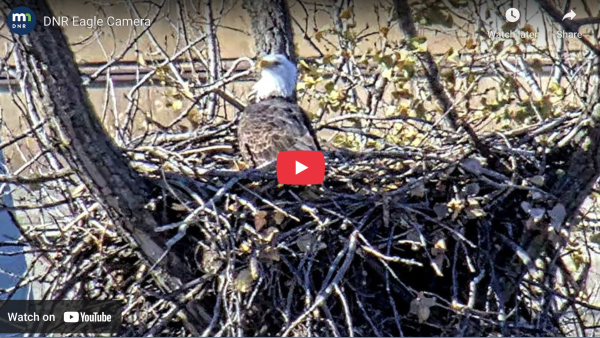
This wildlife camera follows a pair of bald eagles during their breeding season. Minnesota has one of the largest bald eagle populations in the lower 48 states. This pair’s nest is located near the Mississippi River in the Twin Cities area. Watch their story unfold. (Note: there is no audio with this camera at this time.)
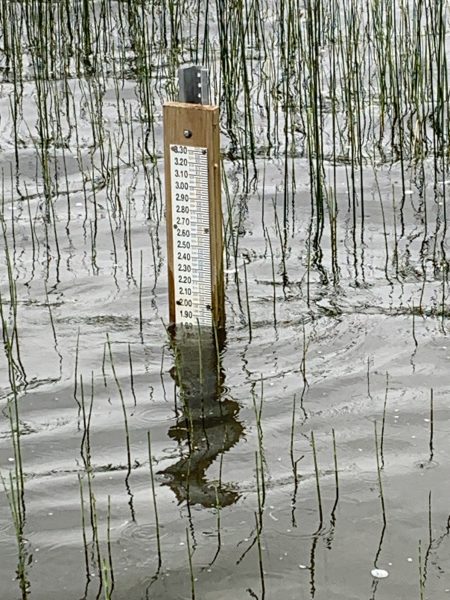
The DNR Water Level Gauge installed for the 2026 season. Currently Deer Lake is at its “normal”, median level.
Both Deer and the Creek from Moose and Little Moose flow into this intermediary Bay Lake, and then together as the headwaters of the Deer River to the Dam. Waters from the north (Moose and many smaller lakes) do not flow into Deer Lake, but from Bay, with Deer, along the Deer Rive to the Dam. Although the elevations between Moose, Deer, Bay and the Dam are slight, the flow includes no mixing of Deer and Moose Lake waters. This is important because Moose Lake has been infected by Zebra Mussels.
The hydrology graphs below show the lake level fluctuation of the 2025 summer season. Like recent years there has been an increasing degree of change, from high to low at the end of the summer.
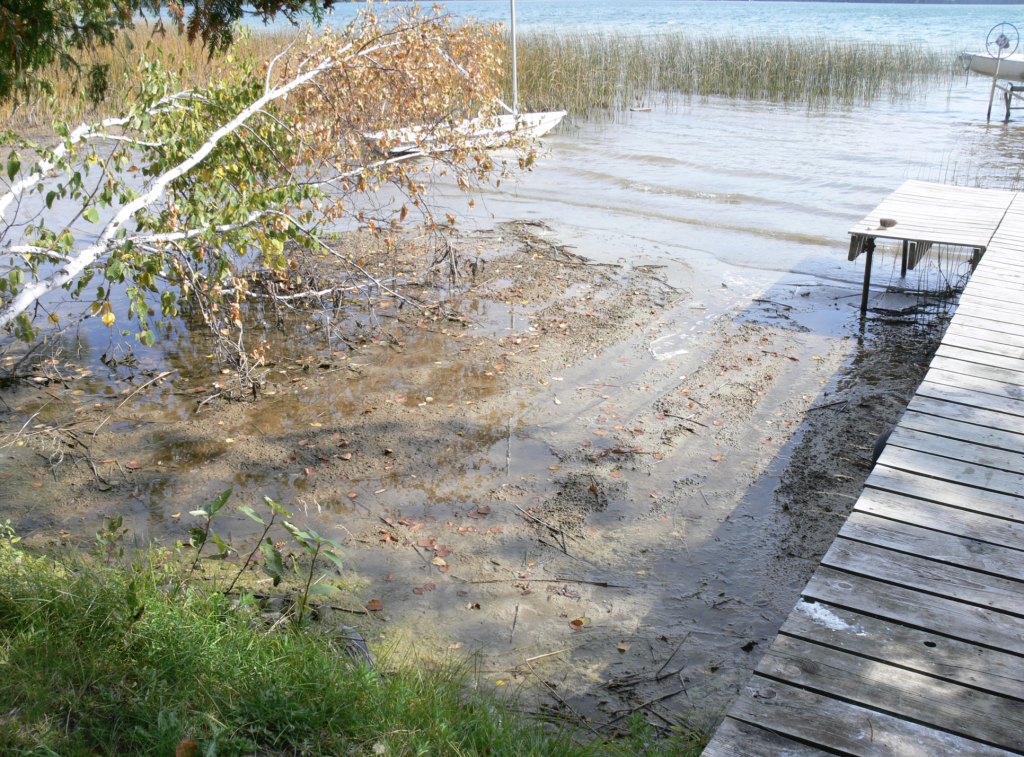
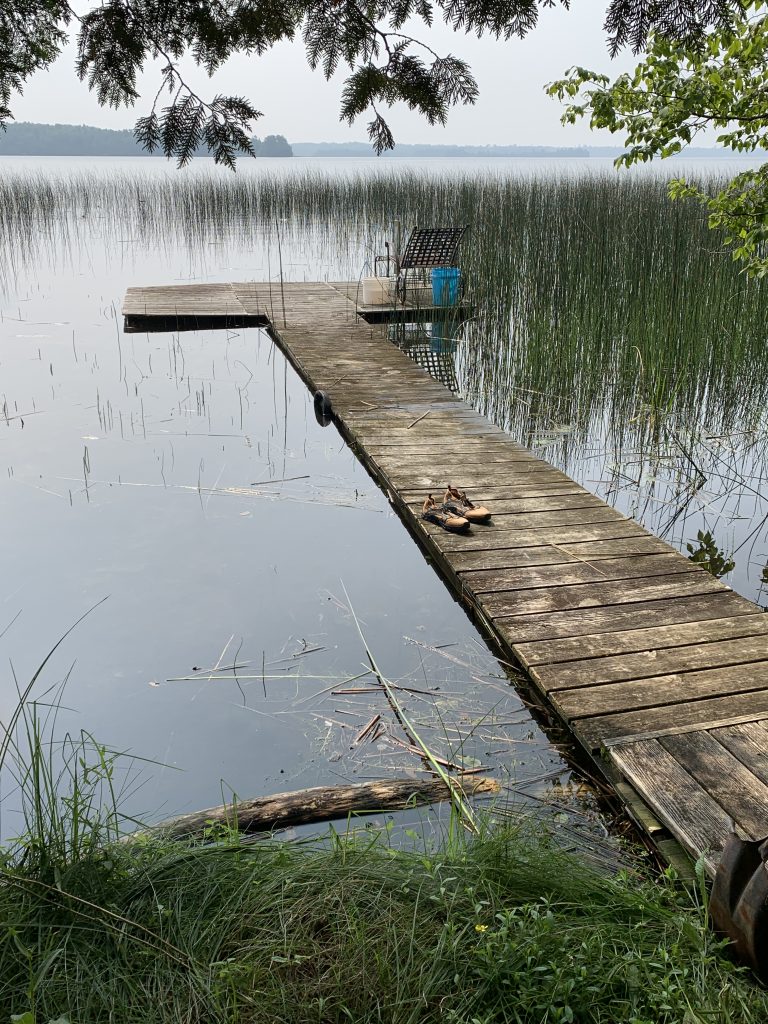
Of interest is the increasing variance between high and low lake levels. Photos below show just how high and low the lake has bee in recent years, with the same dock, same height, as reference. The Low was from August 2021, the high water from July 2025.
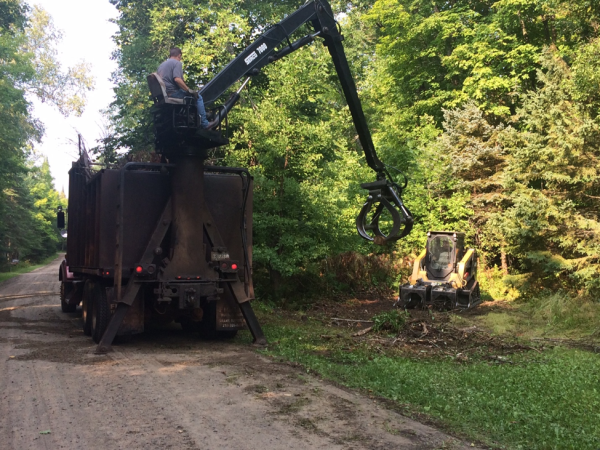
Firewise was completed for the year 2025, but funding has run out for the 2026 season. Efforts are being made to hire an independent pickup around the lake for the willing, willing to pay for it, that is. DLA President Jeff Johnston is collecting names to see if enough residents would be willing to participate. It is hoped that the same contractor, One Two Trees, could provide a group discount.
Our Firewise brush pickup has some protocols. Please have your brush piles stacked and tagged with Bright Ribbons. Best practice recommendation to observe “right-of-way” ordinance accommodating both County workers and One Two Trees. The contractor’s grappling hook can reach piles 15 feet back from the shoulder of the road (as practical).
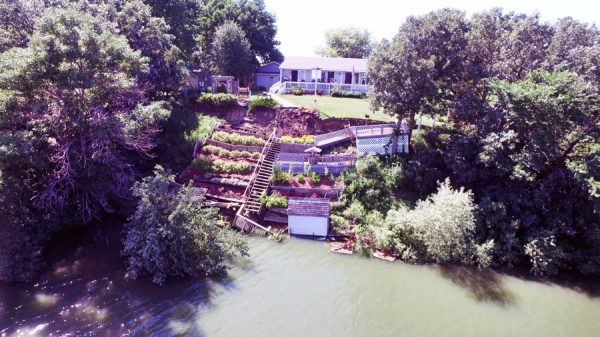
The Itasca County Soil and Water Conservation District (SWCD) offers FREE site visits to discuss the best shoreland projects, provide technical advice and cost-share funding. Contact Austin at austin.steere@itascaswcd.org
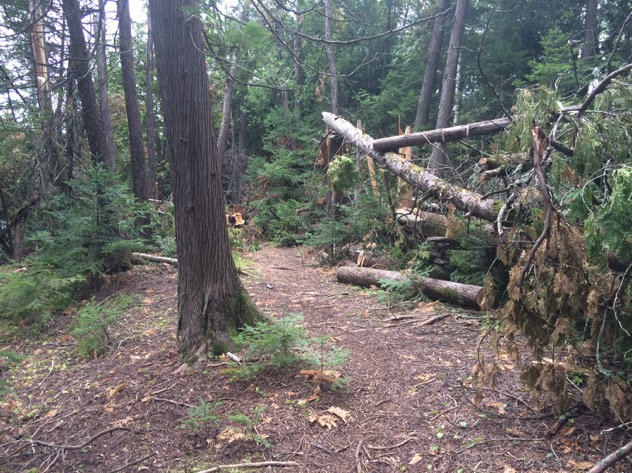
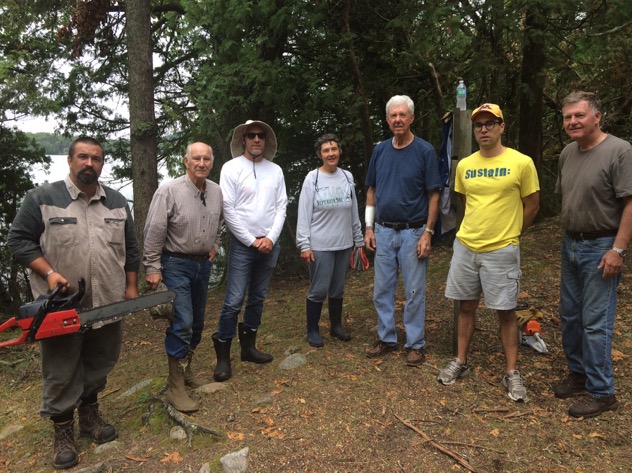
DLA Bear Island Trail Maintenance June 7 – Friday 9:00 AM July 5 – Friday 9:00 AM August 2 – Friday 9:00 AM (In the event of rain – meet the following Saturday)
Bear Island was donated to the State of MN by DLA, who purchased it with donations from lake residents plus State matching funds. Once a month during the summer, DLA members spend about 1 hour keeping the walking trail open and removing trash. RSVP not necessary, just arrive on the south end of the Island at 9am on the scheduled day. If conditions are questionable, call Paul at 651-230-3361. Please volunteer, especially if we have had a bad storm during the month. Bring gloves, wear long pants and bug spray, and bring any equipment you have: gloves, chain saw, clippers, loppers, picaroon, small hand saw, garbage bag, and BUG SPRAY!. Paul will provide coffee/donuts.
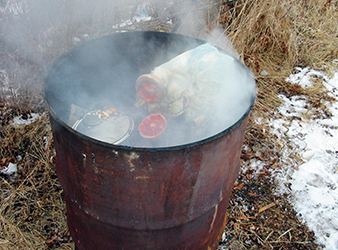
Burning Trash, like in the old days, is not a good idea. It stinks up the neighborhood, and in fact, it is illegal in Minnesota by law. Burning construction debris is also forbidden. Trash and construction debris should be taken to the County landfills, which also accept recycling. The transfer station on County Road 62 north of Cohasset is the closest to Deer Lake. You must purchase your Dump Tickets elsewhere, however, since they are not sold at the station itself. There are also commercial haulers who can pick up your trash by contract.
Burning Brush, on the other hand, is legal, but only with a permit, and only under several conditions. Far better to pile your brush for the FireWise brush pickup program on Deer Lake!
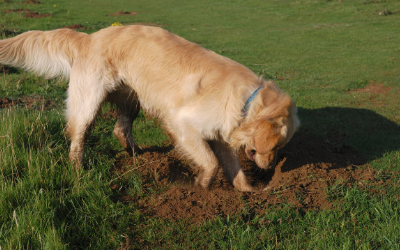
The north woods has dangers even in the dirt! “Blasto” can be a fatal condition for dogs and other animals. If your dog is a “digger” and becomes lethargic, or has difficult breathing with a cough or a fever, you must see a veterinarian as soon as possible. There have been several cases of Blasto in the Deer Lake area in recent years. Here are some links to further information:
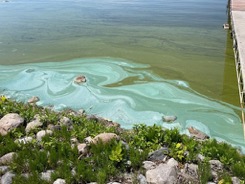
Blue-Green algae is a serious heath problem for you, your kids and pets that occurs sporadically, especially towards the middle and end of the summer, when water temperatures rise, and nutrients have washed into the near-shore area where docks and beaches are located. Sources of nutrients include the runoff from a fertilized lawn to lake, non-compliant septic systems, campfires on the beach, and especially bathing with soap and shampoo. While the contaminants cause harm to the entire lake, it is your immediate shoreline that will be affected the most. Here are several links that provide more information: